In Savannah, Georgia, slope engineering involves evaluating, planning, and reinforcing both natural and artificial earth inclines to guarantee enduring safety and functionality. The locality's coastal plain geography, marked by gentle terrain cut by river bluffs, tidal waterways, and human-made excavations, poses unique geotechnical difficulties. From the escarpments of the Savannah River to stormwater basins in new subdivisions, comprehending soil reactions to fluctuating moisture and loading is essential to avert erosion, minor landslides, and foundation collapses that could endanger structures or community safety.
The local geology is dominated by the Atlantic Coastal Plain physiographic province, where surficial soils typically consist of Pleistocene-age sands, silts, and clays overlying the deeper, more competent Miocene-age Hawthorn Group. These upper sandy layers, often found with interbedded clay lenses, can be highly erodible and prone to sudden loss of strength when saturated by Savannah's intense seasonal rainfall or tropical storms. A thorough slope stability analysis must account for these stratified conditions, transient pore-water pressures, and the potential for seepage erosion, which are the primary triggers of slope distress in the Lowcountry.
In Georgia, including Savannah and Chatham County, regulatory adherence is steered by the state-adopted International Building Code (IBC), while geotechnical assessments align with guidelines from the Georgia Soil and Water Conservation Commission and municipal stormwater management rules. For slopes tied to public works, the Georgia Department of Transportation (GDOT) Standard Specifications enforce stringent criteria for cut and fill slopes, mandating minimum safety factors against sliding. These statutes compel thorough subsurface investigations and engineering evaluations to reduce hazards, particularly for slopes exceeding specific heights or adjacent to water bodies and safeguarded marsh zones.
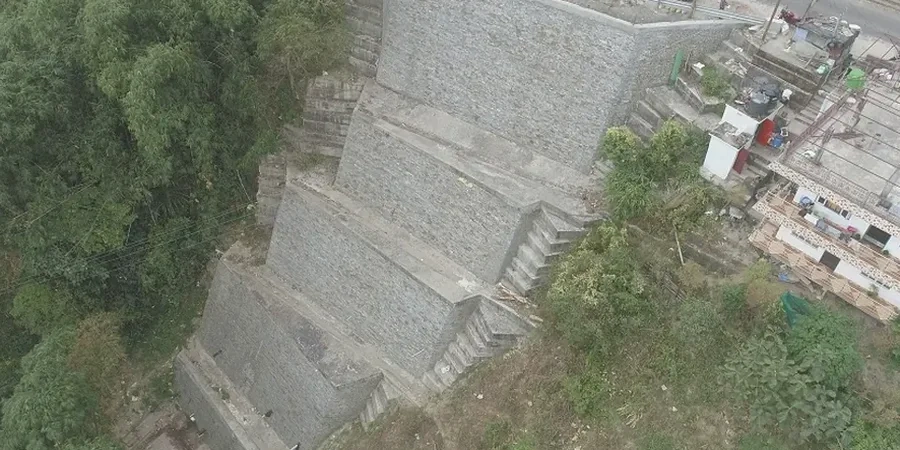
This specialized discipline is essential for a wide array of projects throughout the Savannah area, from stabilizing historic riverfront bluffs for mixed-use developments to designing stable cut slopes for new highway interchanges and industrial park expansions. Residential and commercial developments on the marsh edges frequently require reinforced slopes or retaining structures to manage steep grade changes. For deeper-seated failures or projects with tight spatial constraints, our team designs robust restraint systems, including active/passive anchor design for tieback walls and soil nail arrays that provide lateral support without extensive excavation, preserving the delicate coastal environment.
Frequently asked questions
What are the most common signs of slope instability in the Savannah, GA area?
Tension fissures in the earth at the slope's apex, tilting trees and posts, abrupt appearance of water seepage or saturated terrain at the base, and minor soil sloughing are frequent warning signs. On a broader scale, a bulge at the slope's foot or asphalt cracks near the top may indicate a developing deep-seated rotational slip within the layered sand or clay deposits.
How do Savannah's coastal plain soils affect slope design?
The Atlantic Coastal Plain's layered sands and interbedded clays produce intricate groundwater movement that diminishes effective stress and can precipitate failure. Sandy strata deplete rapidly yet are prone to erosion, whereas clay layers hold moisture and progressively weaken. Engineering design needs to regulate both above-ground drainage and underground seepage to avoid internal erosion and uphold long-term steadiness.
When is a geotechnical investigation required for a slope near Savannah?
Local building regulations usually demand an investigation for any engineered slope exceeding 5 feet in height, slopes that bear structural loads, or those near property boundaries and watercourses. Furthermore, the Georgia Erosion and Sedimentation Act stipulates a thorough analysis for earth-disturbing projects larger than one acre, guaranteeing that planned grading and stabilization efforts will not result in off-site sedimentation or slope collapse.
What stabilization methods are most effective for steep slopes on Georgia's coastal marsh edges?
Optimal strategies integrate both engineered and plant-based approaches. Mechanically stabilized earth (MSE) walls utilizing deep footings or tieback anchors offer the required lateral support in weak, compressible soils. For milder inclines, soil nailing alongside robust turf reinforcement mats shields the surface from tidal erosion and stormwater runoff, blending with the natural marshland scenery.
Location and service area
We serve projects in Savannah Georgia and surrounding areas.