In Savannah, Georgia, in-situ testing is fundamental to dependable geotechnical engineering, as it yields direct measurements of soil and rock properties without the disturbances that accompany laboratory sampling. This category includes various field investigations that assess subsurface conditions exactly where they occur, spanning from the coastal sandy terraces down to the deeper marine clays. For a city renowned for its port, historic waterfront, and swift development into low-lying areas, determining the true bearing capacity, compaction, and permeability of the ground is more than a technical necessity—it protects against structural settling and groundwater-related issues.
Savannah's geology presents a challenging profile shaped by the Pleistocene sea-level fluctuations and the meandering Savannah River. The near-surface stratigraphy typically consists of loose to medium-dense sands of the Wando Formation, interbedded with soft, compressible clay lenses and organic silts. These soils are notoriously variable, and their behavior under load cannot be confidently predicted from borings alone. Deeper Miocene-age formations like the Marks Head Marl introduce cemented, low-permeability layers that complicate drainage and deep foundation design. This depositional complexity demands testing methods that capture real-time density and hydraulic conductivity, making procedures like the field density test (sand cone method) essential for verifying engineered fill compaction in an environment where loose native sands are prevalent.
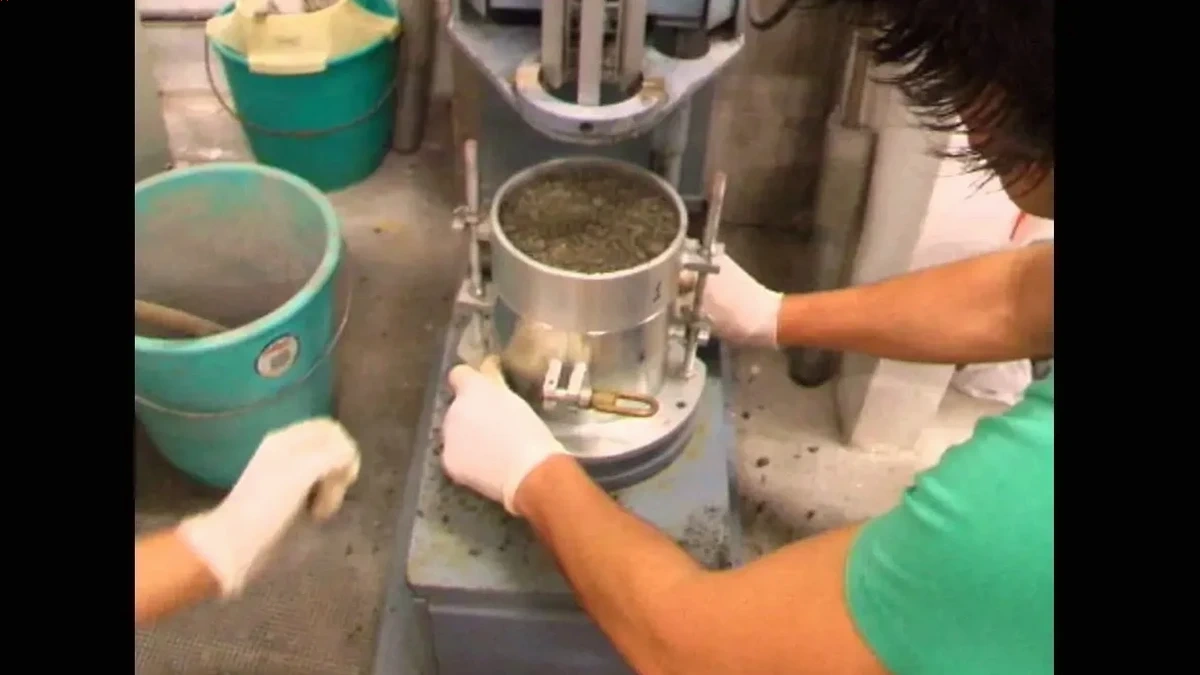
Regulatory compliance in Georgia mandates adherence to ASTM International standards, as adopted by the Georgia Department of Transportation (GDOT) and local building authorities. A typical geotechnical investigation in Chatham County must conform to ASTM D1556 for sand cone density evaluations and ASTM D1194 or D1195 for plate load testing, ensuring consistent, defensible data for foundation design reports. The Georgia Soil and Water Conservation Commission also requires accurate permeability assessments for stormwater infiltration systems, often referencing the field permeability test (Lefranc/Lugeon) to determine if the sandy soils can adequately manage runoff without inducing slope instability or contaminating the Floridan aquifer. These standards are rigorously enforced during the review of site development permits, particularly within the Coastal Empire's jurisdictional wetlands.
The diversity of construction in Savannah demands a tailored approach to subsurface investigation. Heavy port logistics facilities, with their massive crane loads and container stacking areas, rely on the plate load test (PLT) to directly measure the modulus of subgrade reaction and ultimate bearing capacity of the soil, preventing differential settlement under dynamic, repetitive stresses. Meanwhile, the rehabilitation of historic downtown structures on shallow spread footings often requires in-situ permeability testing to diagnose moisture intrusion and design effective dewatering or underpinning systems. Residential and commercial developers pushing into the Pooler and Rincon corridors use field density testing extensively to certify that fill placed over marshland clays meets the 95 percent modified Proctor compaction standard, mitigating long-term settlement risks.
Frequently asked questions
What is the primary advantage of in-situ testing over laboratory soil analysis for a Savannah project?
Natural, undisturbed soil conditions are preserved during in-situ testing, maintaining moisture content, stress history, and structural fabric. In Savannah's delicate marine clays and loose sands, laboratory samples often experience disturbance during transit, which can result in design parameters that are either too conservative or risky. Field tests offer direct assessments of properties like permeability and bearing capacity under real site conditions.
Which ASTM standards govern in-situ testing methods commonly used in Georgia?
Projects in Georgia, including those in Savannah, commonly adhere to ASTM D1556 for sand cone density tests, ASTM D1195/D1196 for plate load tests, and ASTM D6391 for field permeability tests via the Lefranc method. The Georgia Department of Transportation (GDOT) standard specifications frequently augment these ASTM standards with extra regional requirements for earthwork and foundation acceptance.
How do Savannah's local soil conditions affect the selection of an in-situ testing program?
With a stratigraphy that includes loose Wando sands, soft organic clays, and cemented Miocene layers, Savannah demands a multi-method approach. Density tests are vital for compaction control in sandy fills, while plate load tests confirm bearing capacity for shallow foundations over compressible clays. Permeability tests are crucial in sandy zones to design stormwater systems that operate effectively despite a high seasonal water table.
When is a plate load test required instead of a standard penetration test (SPT) during a Savannah site investigation?
A plate load test is required when a direct measurement of the soil's modulus of subgrade reaction or ultimate bearing capacity is needed, especially for large mat foundations, heavy crane pads, or port facility pavements. Unlike the SPT, which provides an indirect measure, the PLT physically loads the soil at the proposed foundation level, giving a dependable sign of settlement behavior under actual stress conditions.
Location and service area
We serve projects in Savannah Georgia and surrounding areas.