In Savannah, the biggest variable under a shallow foundation isn't the structural load—it's the moisture regime in the upper ten feet. The city sits on Pleistocene-age barrier island sequences: loose quartz sands interbedded with stiff, overconsolidated clays. We run into fat clays with PI values above 40 near the Ogeechee River floodplain, while the sand ridges east of I-95 drain fast but can densify unevenly under cyclic loading. A test pits program gives us direct observation of these transitions, and when we need continuous penetration data without sample disturbance, the CPT test maps pore pressure dissipation rates that govern settlement rate. Every footing design we deliver accounts for the seasonal water table swing—shallow in winter, perched in summer after tropical storms.
In Savannah's coastal plain, bearing capacity isn't a single number—it's a function of seasonal saturation and the clay content of the upper sand sheet.
Process and scope
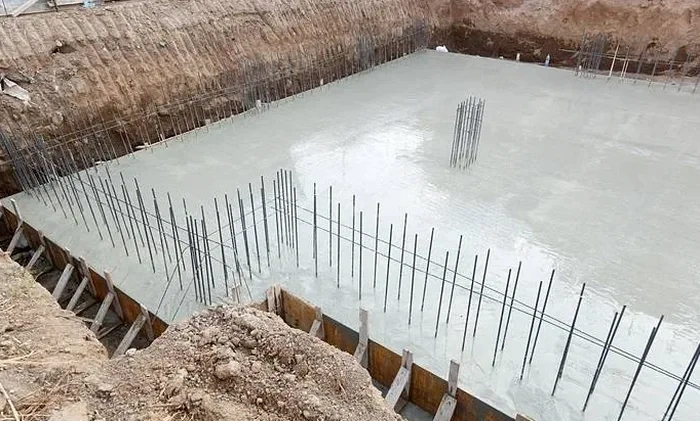
Local ground factors
For the Savannah quadrangle, USGS Quaternary mapping reveals a concealed paleochannel network that runs approximately parallel to the present alignment of the Savannah River. These ancient channels contain loose sands and soft organic silts—materials that undergo consolidation under an additional stress of merely 50 kPa. A foundation footing positioned across the boundary of such a feature will experience differential settlement during its first year of operation. Scour presents another hazard: any shallow foundation situated inside the 100-year floodplain identified by FEMA for Chatham County must have its bearing elevation placed deeper than the calculated scour depth; otherwise, the designer must accept a lowered resistance factor for flood conditions. For every split spoon sample taken from the top 4.5 meters, we determine organic content through loss-on-ignition testing; if this value exceeds 5 percent, we advise either over-excavation or changing to a deep foundation system.
Reference standards
The relevant standards include IBC 2021 Chapter 18 for soils and foundations, ASCE 7-22 Chapter 12 concerning seismic design and site classification, ASTM D2487-17e1 for the Unified Soil Classification System, ASTM D1586-18 for the Standard Penetration Test (SPT), and ASTM D2435/D2435M-11(2020) for one-dimensional consolidation.
Other technical services
Bearing Capacity and Settlement Analysis
We determine the net allowable bearing pressure by employing both Vesic and Terzaghi methods, then verify the results against SPT N60 correlations. For clay sublayers, the one-dimensional consolidation settlement is calculated, and time-rate estimates are provided for projects that need to stay on accelerated schedules.
Spread Footing and Mat Foundation Sizing
For column loads reaching up to 2,000 kip, we optimize footing geometry. The thickness of mat foundations and reinforcement suggestions are based on the modulus of subgrade reaction, which comes from either plate load tests or CPT correlations.
Subgrade Improvement Verification
On compacted fill pads, we conduct density testing, observe proof rolling, and perform plate bearing tests. Following Section 1705.6 of the IBC, we provide documentation to the building official, which also includes moisture conditioning protocols suitable for Savannah's clayey sands.
Typical parameters
Frequently asked questions
What is the typical bearing pressure allowed for footings in Savannah?
After applying the factor of safety, most locations with medium-dense sands produce allowable pressures ranging from 1,500 to 2,500 psf. For locations underlain by stiff clay near the Fall Line, values can go up to 3,500 psf. The precise figure depends on the SPT blow counts and consolidation test outcomes for that particular lot.
Do shallow foundations in Chatham County require a geotechnical report for permit?
Indeed. In accordance with IBC Section 1803, both the City of Savannah and Chatham County building departments mandate a signed and sealed geotechnical report for every commercial building, as well as for residential foundations situated on lots that have documented fill or floodplain soils.
What does a shallow foundation design package cost for a typical commercial lot?
For a typical commercial lot that involves two borings, laboratory testing, and a signed foundation recommendation report, the costs vary from US$1,680 to US$3,310. This range depends on the count of footings and whether consolidation testing is needed.
How deep should footings be placed to avoid moisture-related movement?
Our specification calls for a minimum embedment of 18 inches below finished grade, or 12 inches into undisturbed natural soil, taking the deeper of the two. In zones with expansive fat clays—which are frequently encountered west of I-95—we might raise this to 30 inches and advise placing a capillary break composed of clean sand beneath the slab.