Seismic engineering in Savannah, Georgia, encompasses a specialized suite of geotechnical and structural services designed to evaluate and mitigate the effects of earthquake-induced ground motion on infrastructure. While the Atlantic Coastal Plain is often perceived as a region of low seismicity, Savannah's proximity to intraplate fault systems such as the Charleston Seismic Zone—which generated the devastating 1886 earthquake—makes seismic resilience a critical consideration for long-term asset protection. This category covers everything from site-specific hazard assessments to advanced foundation design, ensuring that new developments and retrofitted structures can withstand both the inertial forces of shaking and the secondary geohazards that often accompany them. For projects on the region's characteristic loose, saturated soils, a thorough soil liquefaction analysis is often the first step in determining whether the ground itself poses a threat to stability.
The local geology of Savannah is dominated by Quaternary and Tertiary-age sediments of the Atlantic Coastal Plain, consisting of interbedded sands, silts, and clays deposited in fluvial and marine environments. These unconsolidated deposits, particularly the loose, water-saturated sands found in low-lying areas and along the Savannah River, are inherently susceptible to phenomena like amplification of seismic waves and loss of shear strength during cyclic loading. The depth to competent bedrock varies considerably across Chatham County, often exceeding several hundred feet, which can alter the spectral response of a site in ways that standard building code assumptions may not capture. Understanding this subsurface variability is essential, as it directly influences the selection of ground improvement techniques or the decision to employ base isolation seismic design for critical facilities.
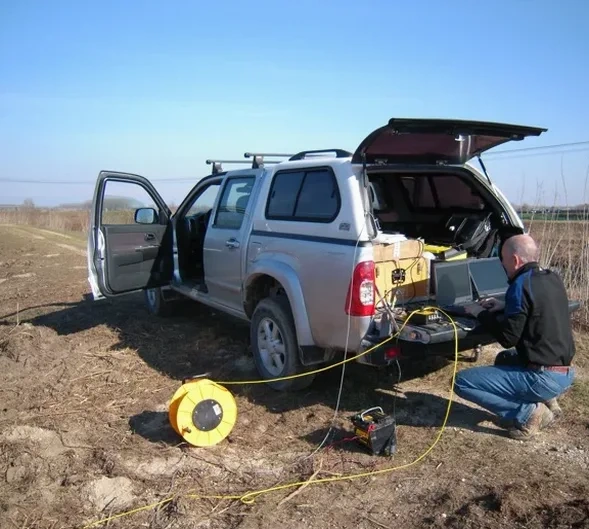
In Savannah, the primary regulatory framework for seismic design is the International Building Code (IBC), as adopted by Georgia, which in turn incorporates ASCE 7 criteria. Although the mapped spectral accelerations for the region are moderate, the code requires strict site classification based on shear wave velocity or standard penetration resistance data. For structures in Seismic Design Category C or higher, explicit geotechnical investigations covering slope stability, lateral earth pressures, and liquefaction potential are mandatory. Dam safety regulations overseen by the Georgia Environmental Protection Division also consider seismic loading, and federal guidelines from FEMA and the U.S. Army Corps of Engineers apply to flood control infrastructure and military installations near Fort Stewart. These multiple standards necessitate a nuanced seismic analysis approach beyond simple prescriptive checklists.
The types of projects that most frequently require seismic services in Savannah include healthcare facilities, educational buildings, emergency response centers, and bridges classified as essential or critical infrastructure. Industrial developments along the port, such as container terminals and liquid storage tanks, also trigger detailed seismic evaluations due to the catastrophic consequences of failure. High-rise structures, even those of moderate height, benefit from dynamic analysis to account for the period elongation caused by deep soil profiles. Increasingly, owners of historic masonry buildings in the downtown district are commissioning seismic vulnerability assessments as part of adaptive reuse projects, seeking to preserve architectural heritage while meeting modern life safety standards. In each case, integrating soil liquefaction analysis with structural modeling ensures that potential ground deformation is accounted for in the foundation design.
Frequently asked questions
What seismic hazards are most relevant to construction projects in Savannah, Georgia?
Ground shaking amplification from deep, soft Coastal Plain sediments and liquefaction of loose, saturated sandy soils near rivers and marshlands represent the main seismic hazards in Savannah. Despite low to moderate regional seismicity, the historical activity of the Charleston Seismic Zone means that long-period structures and critical facilities must account for these site-specific effects in their geotechnical and structural design.
How does the International Building Code classify seismic risk for sites in Savannah?
According to the IBC and ASCE 7, Savannah has moderate mapped spectral accelerations. The code mandates site-specific shear wave velocity measurements to determine the Site Class, which can vary from D to F based on soil stiffness and depth. This classification directly affects the Seismic Design Category and the analysis level required for new buildings and major renovations.
When is a soil liquefaction analysis required by local building standards?
For sites classified as Seismic Design Category C or higher that contain saturated, loose to medium-dense sands within the top 50 feet of soil—as determined by standard penetration or cone penetration testing—a liquefaction analysis is required. The Georgia adoption of the IBC mandates this evaluation for essential facilities and high-occupancy structures, even under moderate shaking intensities.
Can base isolation be applied to existing buildings undergoing renovation in Savannah?
Base isolation can be retrofitted to existing structures, especially historic masonry or reinforced concrete buildings where conventional strengthening would be invasive or architecturally detrimental. This technique involves placing isolation bearings at the foundation level to decouple the superstructure from ground motion, substantially lowering seismic demands and enabling the building to remain operational after an earthquake.
Location and service area
We serve projects in Savannah Georgia and surrounding areas.