Geotechnical laboratory testing in Savannah, Georgia, encompasses a comprehensive suite of analytical procedures designed to determine the physical, mechanical, and chemical properties of soil and rock. This category covers everything from basic index testing to advanced strength and consolidation analyses. In Savannah's low-lying coastal plain environment, accurate laboratory data is not just a regulatory requirement—it is the foundation for safe, economical foundation design. Without precise lab results from tests like the triaxial test, engineers risk underestimating settlement potential or overlooking liquefaction susceptibility in the region's characteristic loose, saturated sands. The laboratory serves as the critical link between field exploration and the design desk, transforming raw samples into actionable engineering parameters.
Savannah's geology is dominated by Quaternary-age deposits of the Atlantic Coastal Plain, creating a subsurface profile that presents unique challenges for construction. Near the surface, loose to medium-dense sands, soft organic silts, and layers of plastic clay are common, often with a shallow groundwater table just a few feet below grade. These conditions demand rigorous determination of Atterberg limits to classify fine-grained soils and predict their volume-change potential. Deeper strata include the stiff, overconsolidated clays of the Hawthorn Group and the calcareous sands of the Miocene-age Coosawhatchie Formation. The variability across short distances in the Savannah area means that laboratory testing programs must be carefully tailored to the specific stratigraphy encountered at each site, whether near the Savannah River or further inland toward Pooler.
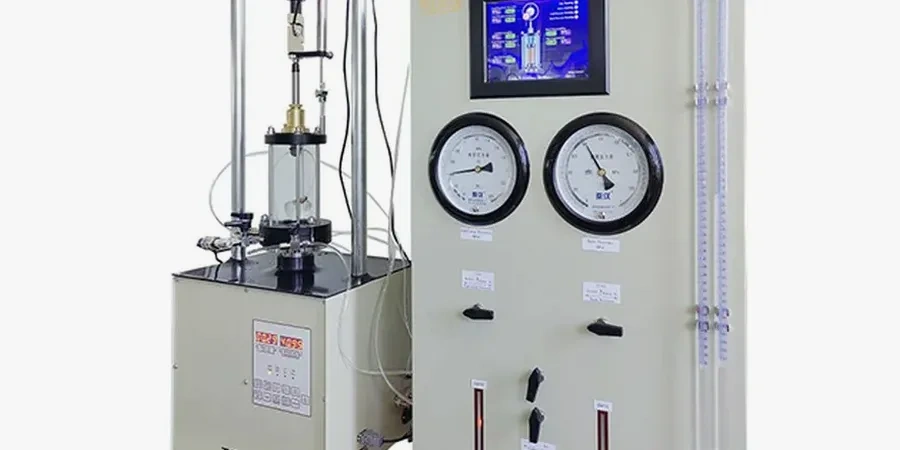
In Savannah, testing procedures strictly follow the guidelines established by the American Society for Testing and Materials (ASTM International) and the American Association of State Highway and Transportation Officials (AASHTO). For infrastructure projects, the Georgia Department of Transportation (GDOT) adds its own specific requirements. A typical geotechnical investigation will cite ASTM D4318 for determining Atterberg limits, ASTM D2435 for one-dimensional consolidation testing, and ASTM D4767 for consolidated-undrained triaxial compression tests on cohesive materials. When a project uses federal funds or falls under City of Savannah jurisdiction, compliance with the International Building Code (IBC) as Georgia has adopted is obligatory. This code demands that laboratory tests confirm allowable bearing and lateral earth pressures, particularly for deep foundations and retaining walls.
The types of projects requiring comprehensive laboratory analysis in Savannah are diverse. High-profile commercial developments along the waterfront, such as hotels and mixed-use structures, rely on consolidation testing to calculate total and differential settlement on compressible strata. Industrial facilities and logistics centers near the Port of Savannah, a major economic engine, require strength testing like the triaxial test to design heavy-duty pavements and deep foundations capable of withstanding dynamic loads. Resilience-focused infrastructure, including stormwater management systems and raised roadways, depends on permeability and compaction tests to ensure long-term performance against flooding. Even residential subdivisions on the city's expanding western edge need basic index testing, including Atterberg limits, to comply with county grading ordinances and mitigate shrink-swell hazards in the prevalent clay-rich soils.
Available services
Frequently asked questions
What is the purpose of a geotechnical laboratory testing program?
To guide foundation engineering and construction planning, a laboratory testing program quantifies the physical and mechanical characteristics of subsurface materials. This process determines properties such as shear strength, compressibility, permeability, and classification—essential for forecasting soil and rock behavior under structural loads and environmental influences, thus guaranteeing safety and economic efficiency.
How do local soil conditions in Savannah influence the choice of laboratory tests?
Because Savannah's coastal plain soils consist of soft clays, loose sands, and a high water table, emphasis is placed on consolidation, strength, and index tests. Consolidation tests measure settlement in compressible clays; triaxial tests assess the stability of saturated sands. Atterberg limits play a key role in identifying expansive clays common to the area, helping to avoid foundation damage.
Which standards govern geotechnical laboratory testing in Georgia?
In Georgia, laboratory testing primarily follows ASTM International standards, including ASTM D4318 for Atterberg limits and ASTM D4767 for triaxial testing. For transportation projects, AASHTO standards apply, and the Georgia Department of Transportation (GDOT) provides extra specifications. To comply with the International Building Code (IBC), laboratory testing is mandatory for structural design validation.
When are advanced tests like the triaxial shear test required over simpler methods?
Advanced testing becomes necessary for projects involving sensitive structures, difficult loading scenarios, or problematic soils. To accurately determine shear strength parameters for deep foundation design, slope stability analysis under saturated conditions, or when evaluating liquefaction potential, a triaxial test is essential. Unconfined compression tests may only be appropriate for initial evaluations of stiff, cohesive soils.
Location and service area
We serve projects in Savannah Georgia and surrounding areas.