A contractor called us halfway through a 28-foot excavation on Bay Street. The sheet pile wall was creeping inward, and water was seeping through the interlocks faster than the sumps could handle. The original design had assumed passive resistance from a dense sand layer that, as it turned out, was five feet deeper than the borings showed. We redesigned the lower row of tiebacks as active anchors extending into the Cooper Marl, preloaded each tendon to 80% of design load, and installed the passive zone drainage within four days. Savannah's subsurface doesn't read the textbook. The alternating layers of Pleistocene sand, soft clay, and calcareous silt near the coast demand anchor designs that account for both short-term construction conditions and the long-term creep behavior of the soil. For projects near the river or the historic district, combining an anchor system with a retaining walls analysis ensures the facing and the ground behind it work as a single unit, not as two independent problems.
An anchor is only as reliable as the soil that holds it. In Savannah, that means designing for water before designing for steel.
Process and scope
Local ground factors
Over the past twenty years, the growth of Savannah's port and its associated logistics corridors has placed substantial structures on ground that was tidal marshland not even a century ago. The fill material used in these areas is often not engineered. Soil samples we've taken from locations along the Savannah River show that the top 12 feet consist of loose silty sand mixed with oyster shell fragments and decomposed organic matter. Installing an anchor in such material without a detailed site assessment poses significant liability. The dangers include not just insufficient capacity but also differential settlement between anchored walls and adjacent footings, accelerated corrosion in acidic marsh soils, and long-term relaxation in clays that deform under constant load. For structures classified as Risk Category III or IV per ASCE 7, we mandate a site-specific geotechnical study that includes at least one deep boring for each anchored wall line, lab consolidation tests on any cohesive layer within the bond zone, and an evaluation of corrosion potential. The extra cost of this study is minimal compared to the expense of replacing a failed anchor system just three years after the building is in use.
Reference standards
The applicable standards and references are IBC 2021 (Chapters 18 and 16), ASCE 7-22, PTI DC-35.1-14 (Recommendations for Prestressed Rock and Soil Anchors), ASTM A416/A416M-18 (Standard Specification for Low-Relaxation, Seven-Wire Steel Strand for Prestressed Concrete), and FHWA-NHI-10-016 (Mechanically Stabilized Earth Walls and Reinforced Soil Slopes).
Other technical services
Geotechnical Investigation for Anchor Design
We perform deep borings with standard penetration testing and soil classification according to ASTM D2487 to identify the bond zone stratum, monitor groundwater levels, and retrieve undisturbed samples for lab shear strength tests.
Active Tieback Anchor Design
We compute the free length, bond length, and tendon size for soldier pile, sheet pile, and diaphragm walls. This includes lock-off load calculations and staged excavation modeling.
Passive Anchor and Deadman Systems
We design passive ground anchors, concrete deadmen, and helical anchors for retaining walls when space constraints or neighboring structures prevent the use of tiebacks that extend beyond the property line.
Anchor Load Testing and Verification
We conduct performance tests, proof tests, and extended creep tests in accordance with PTI standards. Our services include on-site supervision, data interpretation, and acceptance criteria tailored to Savannah's soil conditions.
Typical parameters
Frequently asked questions
What is the difference between an active and a passive anchor?
An active anchor is post-tensioned to impart a compressive force on the structure, usually between 70% and 80% of its design load, minimizing wall movement during later excavation stages. A passive anchor is not tensioned; it only generates resistance when the wall moves outward and mobilizes soil shear strength. In Savannah's soft clays, we prefer active systems because passive anchors require greater wall movement to activate, which could harm adjacent utilities or historic buildings.
How much does an anchor design and testing package cost in Savannah?
For a typical commercial excavation project in the Savannah region, the full anchor design package—covering site investigation review, computational analysis, construction specifications, and on-site load testing supervision—generally costs between US$1,190 and US$3,380. The variation depends on the number of anchored wall lines, soil profile complexity, and whether corrosion protection is needed.
How deep should anchor bond zones be in Savannah's coastal soils?
The bond zone must reach into a competent stratum beneath any soft or organic layers. In much of Savannah, this means penetrating Pleistocene sands or the Hawthorn Formation at depths of 30 to 55 feet. We determine the precise depth using site-specific borings and cone penetration tests. The bond length is calculated from the soil-grout interface strength confirmed by on-site testing, never assumed from generic charts.
Do anchors in Savannah require corrosion protection?
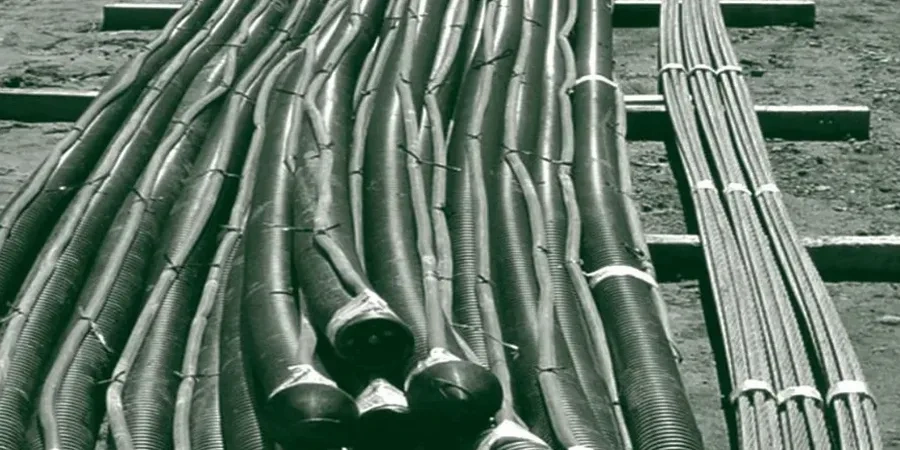
Yes. Savannah's high groundwater table and the acidic nature of marsh-influenced soils create an aggressive environment for steel. For permanent anchors, we specify Class I corrosion protection per PTI DC-35, which involves double encapsulation of the tendon with corrugated sheathing and factory-applied epoxy coating on the strand. For temporary anchors with a service life under 24 months, Class II protection may be acceptable, but we always recommend a soil resistivity test before making that decision. More info.